Missouri Harvest Season: Why Rural Roads See More Semi-Truck and Grain Truck Traffic in the Fall
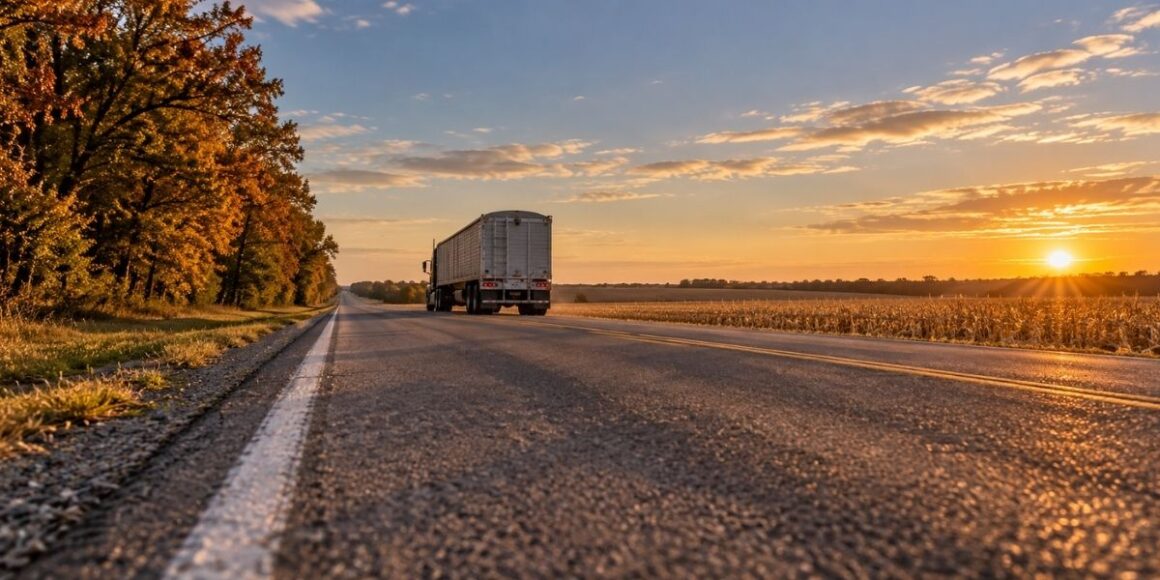
Every fall, the roads around Springfield fill with a kind of traffic most drivers only half-notice until they are stuck behind it: grain trucks, combines moving between fields, and semi-trucks hauling freshly harvested corn and soybeans to elevators and processing facilities across the Ozarks. It is a normal, necessary part of the region’s agricultural economy. It is also a season when the combination of heavier truck volume, longer driver hours, and narrow county roads not built for large commercial vehicles adds up to more serious crashes.
Why Harvest Season Changes the Math on Rural Roads
Southwest Missouri’s farm country runs on county roads and state highways that were never designed with today’s grain truck traffic in mind. Two-lane roads with no shoulder, blind hills, and unmarked field entrances are common throughout Greene, Christian, Webster, and Dallas counties. During a normal month, that infrastructure handles a manageable amount of traffic. During harvest, when trucks are running from sunup past sundown to move grain before weather turns, those same roads see a sharp seasonal spike in large vehicle traffic, often mixed in with regular commuters who are not expecting to come around a curve behind a slow-moving combine or a fully loaded grain truck.
Rural roads already carry a disproportionate share of the nation’s traffic fatalities relative to how much they are actually driven on, according to the Federal Highway Administration. Add harvest-season truck volume on top of that baseline risk, and the weeks between late September and early November become one of the more dangerous stretches of the year for anyone sharing the road with agricultural traffic on routes like US 65, MO Route 14, and the county roads that feed into them.
The Federal Rule Most Drivers Have Never Heard Of
Commercial trucking is one of the most heavily regulated industries on the road, and most people assume that means every truck driver’s hours are tightly monitored. During planting and harvest season, that is not entirely true, and the reason matters for anyone hurt in a crash involving a grain hauler.
Under 49 CFR 395.1(k), the Federal Motor Carrier Safety Administration exempts drivers hauling agricultural commodities from the standard hours-of-service rules, including the electronic logging device requirement, as long as they stay within 150 air miles of the source of the load and the exemption falls within the state’s own defined planting and harvest period. In practical terms, that means a driver hauling grain within that radius during harvest season is not limited by the same driving-hour caps that apply to over-the-road truckers the rest of the year, and there is no electronic log requiring them to record it.
This is not a loophole anyone is hiding. It is a long-standing, publicly documented federal exemption, and there are legitimate reasons behind it tied to the time-sensitive nature of harvesting a crop. But it also means that in a crash involving a fatigued grain truck driver during harvest season, the usual hours-of-service violation that would otherwise be central to a case may simply not exist as a documented fact, because the driver was never required to log those hours in the first place. Building a fatigue-related claim in that situation requires a different kind of investigation: driver interviews, dispatch records, fuel receipts, and other evidence that can establish how long a driver had actually been working, since the ELD paper trail that exists the rest of the year is not automatically there.
What to Do After a Crash With a Grain Truck or Semi
The basics of any serious crash still apply. Seek medical attention, document the scene if you are able to safely do so, and get a copy of the police report. But a few things are worth paying particular attention to in a harvest-season truck crash specifically:
- Note whether the truck was hauling a raw agricultural commodity like corn, soybeans, or another unprocessed crop, since that is what determines whether the federal exemption is even in play.
- Ask whether the truck belonged to an individual farmer, a co-op, or a for-hire carrier. Liability and insurance coverage can look very different depending on which one it was.
- Preserve any available dashcam or surveillance footage quickly. Rural roads have far less camera coverage than urban corridors, so what exists tends to be limited and worth securing before it is lost.
Missouri’s Deadline to File a Claim
Missouri law generally gives injury victims five years from the date of the crash to file a personal injury lawsuit, under RSMo 516.120. Wrongful death claims are subject to a shorter three-year window. Five years can feel like a long time, but evidence in a rural crash, from skid marks to witness memory to available equipment records, only gets harder to gather as time passes. In cases where a harvest-season crash results in a fatality, our wrongful death team works alongside the truck accident attorneys handling the liability investigation.
Strong Law, P.C. and Truck Litigation
Strong Law, P.C. has represented Ozarks families affected by serious truck crashes for decades, including cases that went to trial rather than settling for less than they were worth. Our results page reflects that trial-readiness. As one client, Gene H., put it after his own truck accident case:
“This firm went to trial on my behalf and I was awarded a jury verdict 14X what was proposed by an at fault tractor trailer defendant, how it happened. Steve Garner and Nick Smart. Steve Garner is one of if not the best trail attorney in the country. Steve is a caring, compassionate man who is fearless and brilliant when dealing with unreasonable- at fault defendants. Nick Smart, a genius with an attention to detail who works tirelessly with Mr Garner to ensure you are fully prepared for a jury trial.”
Past results do not guarantee a similar outcome in any individual case. Every case depends on its own facts.
Frequently Asked Questions
Who can be held liable in a truck accident case?
Truck accident claims often involve more than just the driver. The trucking company, cargo loaders, or even the equipment manufacturer may share liability depending on what caused the crash.
What federal regulations apply to trucking accident cases?
Commercial trucking companies and drivers are subject to federal safety regulations, including hours-of-service and vehicle maintenance rules. When a violation contributed to a crash, it can be an important factor in establishing liability. Certain agricultural hauling is exempt from some of these rules during planting and harvest season, which changes what evidence is available in a crash investigation.
What should I do immediately after a harvest-season truck accident?
Seek medical attention first and make sure everyone involved is safe. Photograph the scene and your injuries if you are able, save contact information for any witnesses, and get a copy of the police report. Contact us early in the process so we can begin investigating while evidence is still available.
How long do I have to file a truck accident claim in Missouri?
Generally five years from the date of the crash under Missouri law. Wrongful death claims have a shorter three-year window.
If you or a loved one has been hurt in a crash involving a semi-truck or grain hauler this harvest season, contact Strong Law, P.C. for a free, no-obligation consultation. You pay nothing unless we win your case.
This post is for general informational purposes only and does not constitute legal advice. Reading this article does not create an attorney-client relationship with Strong Law, P.C. Every case depends on its own facts, and you should consult a licensed Missouri attorney about your specific situation.
Follow Strong Law, P.C. on Facebook and LinkedIn for more legal updates.
You pay nothing unless we win your case. Contact Strong Law, P.C. today for a free, no obligation case review.


Tell Us About Your Case
Contact us today at (417) 887-4300 or online to arrange your free case evaluation. Our Experienced Trial Attorneys will walk you through your legal options.