Why Furnace-Related Gas Explosions Are More Common Than Homeowners Think
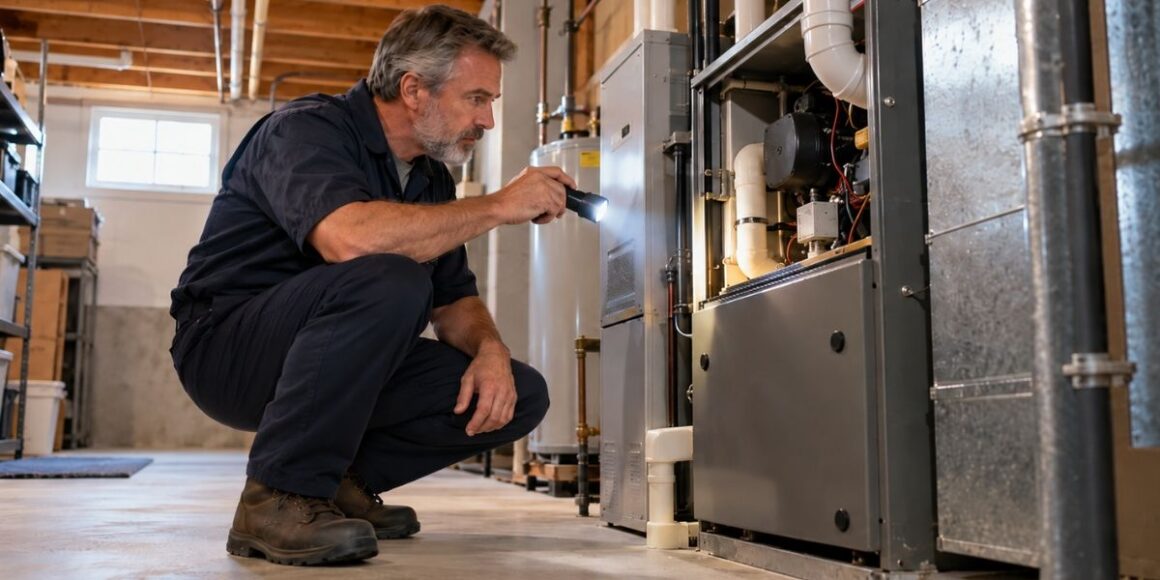
A furnace is one of those household systems most people never think about until it fails, tucked away in a basement or utility closet and largely forgotten between one heating season and the next, and a gas furnace failure can range from a simple pilot light issue to a genuine explosion risk. Furnace-related gas incidents happen with more regularity than most homeowners realize, often traced back to equipment defects, improper installation, or deferred maintenance that let a small problem grow into something dangerous.
How a Furnace Becomes an Explosion Risk
A gas furnace is designed to burn fuel in a sealed combustion chamber and vent the byproducts safely outside the home. That system fails in a few predictable ways: a cracked heat exchanger can let gas and combustion byproducts leak into the surrounding air, a malfunctioning gas valve can allow fuel to build up before ignition rather than burning cleanly as it enters, or a blocked or disconnected vent pipe can trap gas and exhaust inside a confined mechanical room or basement instead of carrying it outside. Any of these conditions can turn a routine heating cycle into an explosion risk, particularly in an older furnace that has gone years without a proper inspection. A furnace that has been improperly sized for the space it serves, or installed without the clearances the manufacturer specifies, can also run hotter or less efficiently than it was designed to, accelerating wear on components that were never built to handle that kind of ongoing stress.
Whose Responsibility Is It When a Furnace Fails?
Responsibility in a furnace-related gas explosion case depends heavily on what actually caused the failure, and rarely comes down to a single obvious culprit once the investigation actually gets underway. A manufacturing defect in the furnace or one of its components points toward the manufacturer. An installation that did not follow the manufacturer’s specifications or local code points toward whoever installed the unit. A landlord who was notified of a gas smell or a malfunctioning furnace and failed to act can be liable for negligence rather than product liability. A gas utility that failed to properly maintain or inspect a line feeding the home can also share responsibility, depending on where the failure actually occurred along that chain.
Sorting out which of these applies, and sometimes more than one applies at once, is part of the early investigation in a furnace explosion case. The physical evidence, the furnace itself, the gas line, any available maintenance records, often has to be preserved and examined by a qualified expert before it gets discarded or repaired away during cleanup. This is one of the more time-sensitive parts of a gas explosion case: a damaged home often needs repair work to begin quickly for the family’s own safety and livability, and without a deliberate effort to document and preserve the failed components first, the physical evidence that would otherwise prove exactly what went wrong can disappear along with the debris.
Why These Incidents Cluster in Certain Seasons
Furnace-related gas incidents are not evenly distributed throughout the year. They tend to rise whenever furnaces that have sat unused for months get fired up again after a period of disuse, since a crack, leak, or blockage that developed while the system was idle often does not reveal itself until the furnace is actually running under real heat and pressure again. This makes routine pre-season inspection one of the more effective, and most frequently skipped, ways homeowners can catch a developing problem before it becomes a genuine hazard. A technician checking a furnace for the first time in a year can often spot a cracked component, a loose connection, or a buildup of debris in a vent before the system is ever put under the strain of a full heating cycle, which is exactly the window when prevention is cheapest and easiest.
What the Data Shows Nationally
The Pipeline and Hazardous Materials Safety Administration tracks incident data across the natural gas distribution and transmission systems that ultimately feed into individual homes, and its data shows that fire and explosion remain a recurring cause of reported incidents across the country every year. While not every furnace explosion traces back to the distribution system itself, rather than the furnace or the home’s own gas lines, the broader pattern underscores that gas appliance safety is an ongoing public safety issue rather than a rare or freak occurrence.
This kind of agency-level data matters in a legal case for a reason beyond raw statistics. It establishes that the risks involved in gas distribution and gas appliance operation are well known and well documented across the industry, which makes it harder for a manufacturer, installer, or utility to argue that a particular failure mode was some kind of unforeseeable surprise. An industry that already tracks these incident patterns closely is an industry that reasonably should have been building safeguards against them.
Strong Law, P.C.’s Approach to Gas Explosion Cases
Strong Law, P.C. investigates furnace and gas explosion cases by tracing responsibility across every party in the chain, the manufacturer, the installer, the landlord, or the utility, rather than assuming the furnace itself is automatically to blame. Because these cases frequently overlap with product liability claims against a manufacturer, the firm’s practice areas cover both, whether a case is centered in Springfield or St. Louis. The firm’s attorneys work with engineers and fire investigators to establish exactly where in that chain a failure occurred. As one client, William G., shared:
“I felt like there are no better attorneys than Strong Law firm that helped me with my case, especially since I was familiar with how the legal system works.”
Frequently Asked Questions
What can cause a gas explosion case?
Gas explosion cases can arise from equipment defects, negligent installation, or failure to properly maintain gas lines or appliances, among other causes.
What kinds of injuries result from gas explosions?
Gas explosions can cause severe burns, blast trauma, and property destruction, and may lead to wrongful death claims in the most serious cases.
Who can be held liable for a furnace-related gas explosion?
Depending on the cause, liability may fall on the furnace manufacturer, the installer, a landlord who failed to address a known problem, or the gas utility responsible for maintaining the line feeding the home.
What should I do if I smell gas near my furnace?
Leave the home immediately, avoid anything that could create a spark, including light switches, and call the gas utility’s emergency line from outside before contacting anyone else.
A free consultation is a chance to walk through what actually happened, before an insurer’s own investigation gets to frame the narrative first. If a furnace-related gas explosion has injured you or a loved one, contact Strong Law, P.C. for a free, no-obligation consultation.
This post is for general informational purposes only and does not constitute legal advice. Reading this article does not create an attorney-client relationship with Strong Law, P.C. Every case depends on its own facts, and you should consult a licensed Missouri attorney about your specific situation.
Follow Strong Law, P.C. on Facebook and LinkedIn for more legal updates.
You pay nothing unless we win your case. Contact Strong Law, P.C. today for a free, no obligation case review.



Tell Us About Your Case
Contact us today at (417) 887-4300 or online to arrange your free case evaluation. Our Experienced Trial Attorneys will walk you through your legal options.